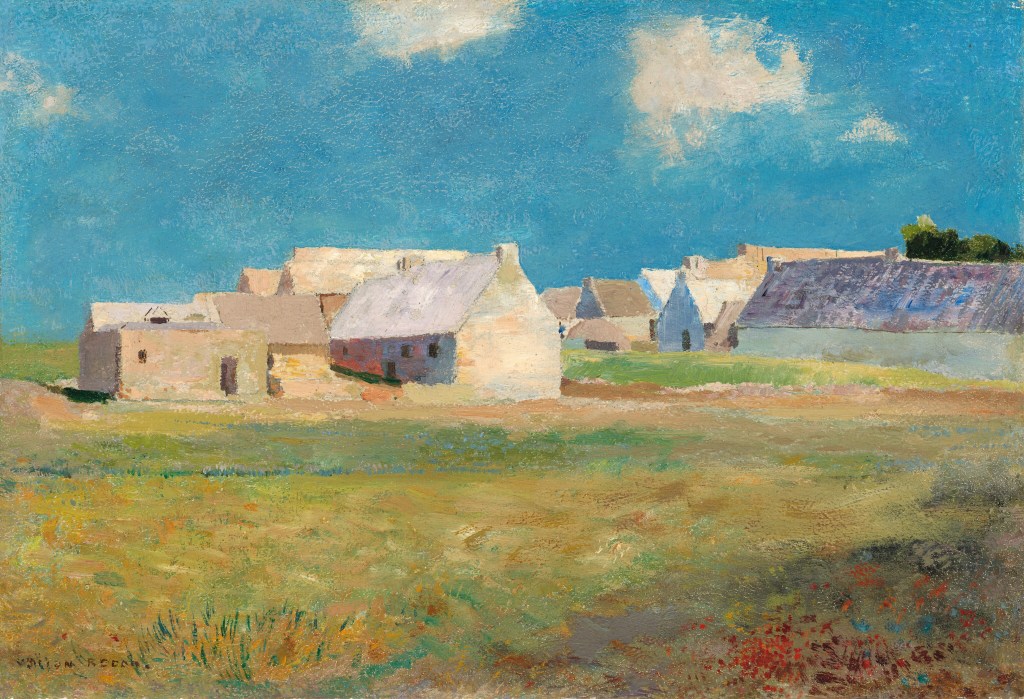
Odilon Redon, National Gallery of Art
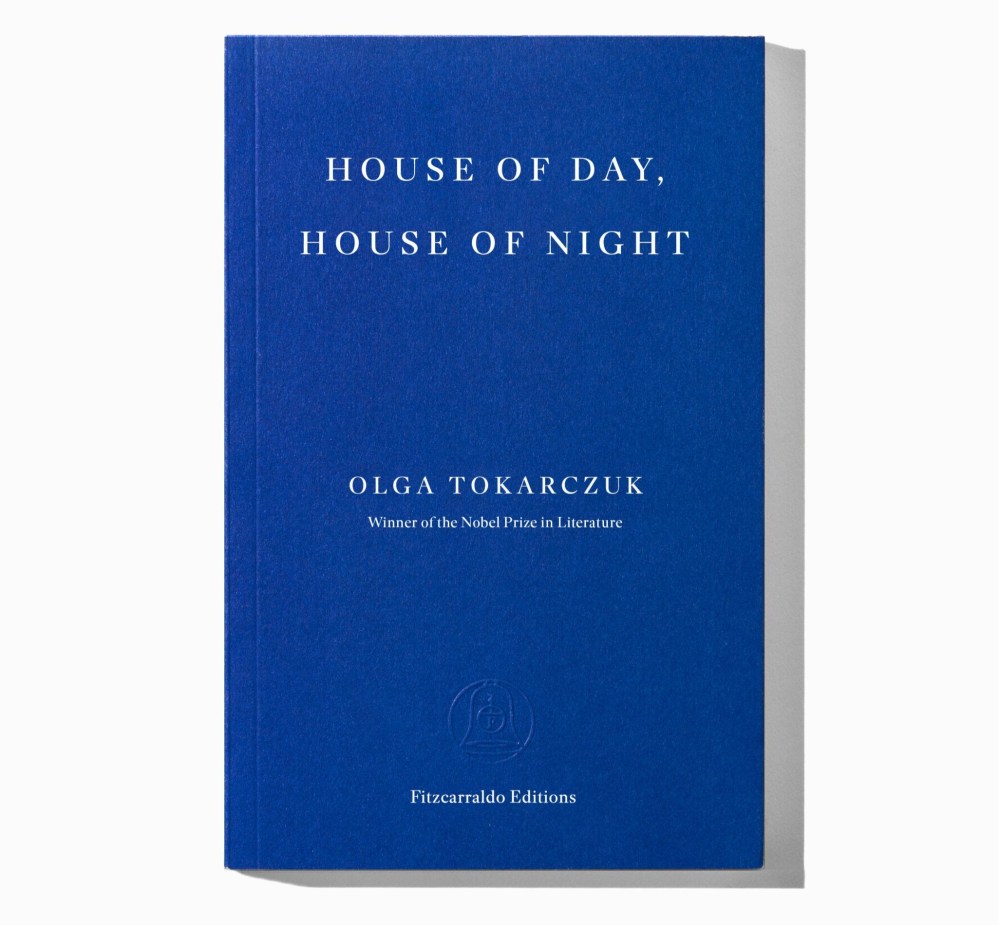
In House of Day, House of Night, an unnamed woman and her partner ‘R.’ move to a remote Polish village. Through conversations with their elderly neighbour Marta, conversations which are sometimes halting, at other times digressive but frequently surprising, they gain a deeper understanding of their new home.
Comprising a curious mix of dream sequences, historical records, biography, and recipes alongside scenes of daily life, this ‘constellation-novel’ explores the history of Nowa Ruda and its inhabitants both past and present – including a conflicted young monk who finds solace compiling the life story of Saint Kummernis; a tragic alcoholic overcome by the black stork screaming and fluttering in his chest; a noble family who live their beautiful lives in an ever-expanding mansion at a remove from the rest of the town; and a religious community of bladesmiths worshipping ‘futility on all the earth’. Our players also feature the non-human amongst them, particularly a host of mushrooms that crop up throughout the text – amanitas, puffballs, lurid boletes, velvet feet.
In the text, Nowa Ruda is described as a ‘fragment town’. Through this narrative mosaic, Olga Tokarczuk explores how a place that seems both barren and stagnant at first glance can contain its own dynamism and reveal a universal interconnectedness – ‘linking things together that would seem impossible to connect’.
Fans of Tokarczuk’s other books will be delighted by House of Day, House of Night, not just because it is written in her usual exquisite style but because it feels like a precursor to much of her later work. For example, readers will note the formal similarities to the International Booker Prize-winning Flights (tr. Jennifer Croft); both works are made up of multi-generic fragments pieced together in service of a larger concept or subject.
The setting itself calls to mind both Drive Your Plow Over The Bones of the Dead (tr. Antonia Lloyd Jones), which is actually set in the same area of Poland, and The Empusium (tr. Antonia Lloyd Jones); the events of both novels unfold in wintry landscapes which conceal something sinister and possibly otherworldly.
Some of the key thematic concerns of this novel also appear in later work: the dilemma of our young monk Paschalis and that of the protagonist of The Empusium, the precariousness of the relationship between humanity and the natural world which also appears in Drive Your Plow, and the focus on alternative, sometimes fictional, histories which fill gaps in and reshape local and national narratives can also be found in the motivation behind The Books of Jacob.
The pleasure of recognising these connections between her texts primes us to identify and appreciate examples of interconnectedness within this novel, and encourages us to step back and observe the relationship between all things more broadly too.
Both in House of Day, House of Night and in The Empusium, the characters speak about things having an ‘appetizing’ quality, inspiring a kind of synesthesic experience that is deeply and completely satisfying. It is a word I associate with the texture of Tokarczuk’s work. House of Day, House of Night is no exception – sentences are crafted in such a way as to allow the reader to indulge in both the philosophical ideas in the text and the way in which they are expressed.
We find ourselves reflected in this passage concerning the recurring character Ergo Sum – a schoolteacher experiencing clinical lycanthropy after tasting human flesh during the war – who ‘enjoyed chewing over the long sentences, relishing their meaning, suddenly discovering a deeper meaning, mulling it over’. We are prompted to savour each word, carefully probing between our teeth to discover new morsels of meaning.
In another passage, the narrator describes a ‘certain way of life’ reserved for the elderly in which days stretch out, filled with the slow, deliberate performance of daily activities ‘it involves not taking action but if you do, doing it slowly, as if it’s not the result of the action that matters, but the actual movement, the rhythm and melody of the movement.’ Tokarczuk forces us to keep this kind of time, slowing us down by drawing our attention to the ‘rhythm and melody’ of the text, not just the action.
Antonia Lloyd-Jones’ deliciously smooth translation facilitates this enjoyment. It seems worth noting that this particular translation comes at a time where the technological race to increase the speed and productivity of our already fast-paced lives seems to be at its zenith, so it feels very well-timed despite the original text being published in 1998.
House of Day, House of Night is wonderfully crafted, a genuine pleasure to read, and a very welcome addition to the existing body of Olga Tokarczuk’s work in English.
Arbnora Selmani is a Kosovar-British writer from London. She is the founder of Porridge magazine’s Comfort Foods section and a regular contributor to the magazine. Her work has also appeared in Asymptote, Tate etc, and Dear Damsels. Her debut pamphlet ‘Portraits’ was published in 2018. She lives in NW London with her husband and son.
 Porridge