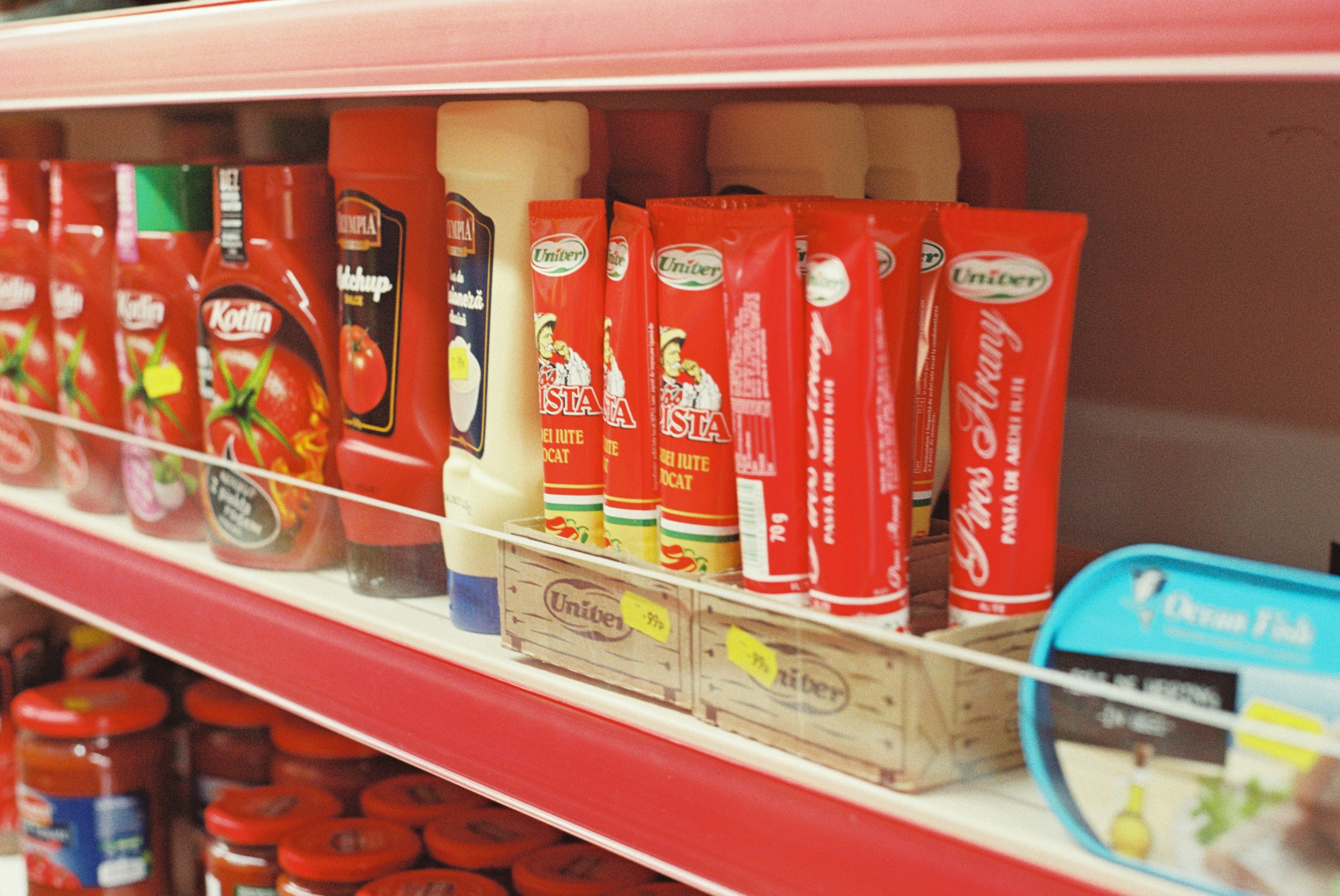
A box of yellow peppers by the fire exit of the aptly named ‘Paprika Store’, that’s where it begins. On the tram back to the park and ride, I shake one of the peppers should a loose seed rattle and whisper some hidden truth from the ancient soil it grew in. No luck this time. My white plastic bag also holds a large metallic packet of Hungarian sweet paprika (édesnemes), which forms the basis of a hearty goulash (gulyás), plus caraway seeds, dense winter salami, a salty pogácsa and a few cans of Kőbányai. These will feed me for a while, the salami lasting longest, the thick slices getting thinner and thinner as I try to make it last just a few days more.
Food is a way of connecting to a lost heritage. In my corner of the Midlands, this feels alive in the history of the region’s culinary output. Following World War Two, Polish airmen faced political persecution should they return to their now Moscow-ruled country. Many Poles previously based in airfields found work in the local coalfields. A corner store in Forest Town would order salami from Ireland, the country having a significant Italian diaspora, providing some sort of continental familiarity to the new settlers from the East. Eventually a Czech exile would open a continental meat factory in nearby Warsop and a Polish delicatessen would open in Mansfield too, but until then the Italian salami would have to do.
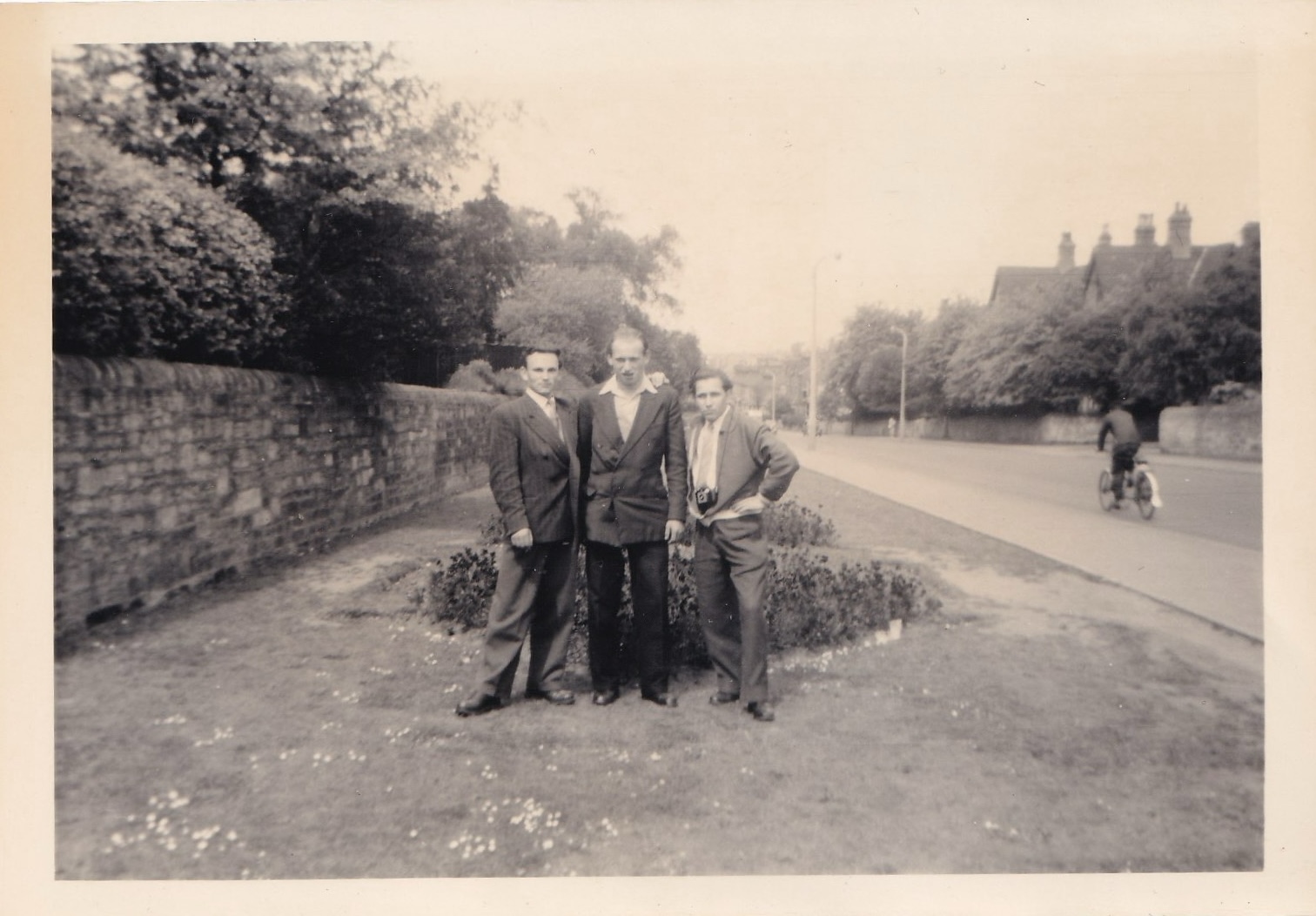
When I feel I lack the right guttural sounds and tongue rolling for the language, when my skin maybe burns too easily in the summer heat, a cold beer from the ‘Parpika Store’ or a simple lecsó has soothed me. I look at a photo of my Hungarian grandfather and his compatriots in Carr Bank Park, posing by the flowerbeds on Woodhouse Road, and know it is possible to belong to more than a single place.
*
A house in a suburb of town, coffee-coloured carpets and a dark wood fireplace is where I first learned to take care spooning hot paprika into my mouth, especially while wearing a light coloured tee. I learned the acrid smell of sauerkraut as the lid of the jar popped. That sweet and sour were a perfect pairing. This house is where my Aunty Dorothy and Uncle Van first introduced me to Hungarian hospitality and cuisine, pouring my parents copious amounts of fruity red wine, insisting my sister and I eat another pancake.
Even if I refused the cottage cheese filling as best I could, these meals were joyous, loud, centring in a way I didn’t really understand. What I did understand is that if this old Hungarian man, who spoke English with such a thick accent after over half a century here, treats me as Hungarian too, then I must be. Who could argue with Van? His validation was dearer to me than my mothers; who despite her insistence, dark olive skin, and occasional flaunt of the language, never quite seemed to appease me.
Van was a Hungarian of 1956, just like my grandfather. A man who, at sixteen, cycled to the Austrian border for his freedom and a better life, risking a bullet for something more. In England, my nineteen-year old grandfather attempted to be a paternal figure for Van, a reliable fixture in this new, colder climate. They were good friends, played cards together most weekends, both enthusiastically green thumbed. When my grandfather died my mother was sixteen, and Van was distant but also reliable, protective. He would translate the letters sent from a boy in the West Transdanubian village she had holidayed the past few summers. To me he was the only Hungarian I knew for many years. He mentored me in the ways of his countrymen. In early adolescence, my mother’s insistence that we were Hungarian really didn’t satisfy me. If anything, it was grating; I needed something more definitive. I asked Van to teach me to make gulyás.
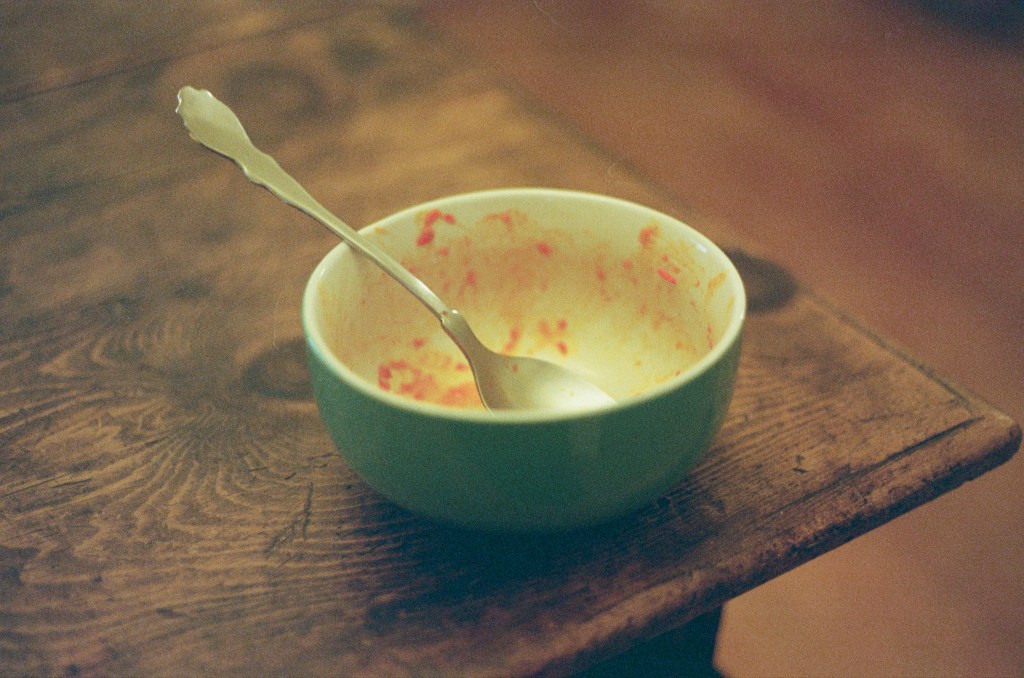
My mother dropped me, the eager apprentice, off at the bungalow mid-morning. Van was already sat outside; two knives, two chopping boards, and two white onions lay on the small glass bistro table near the greenhouse – his mestermű.
I struggled to understand what Van was saying. But after translating his grumblings, I learned to finely chop an onion, the proper way to fry the meat and toast the earthy caraway seeds, when to add the garlic so it doesn’t burn bitter. Then the goulash just bubbled away for the rest of the day. This I understood: one pot wonders are a universal comfort, their ease and coziness are one of life’s few dependable joys. In the afternoon Van went for his nap, and Dorothy taught me to make pancakes. They are more like thin crepes, better for rolling than the slightly thicker English ones. She was the proud archivist of his life, telling me stories of Zamardi, the town on the great lake where he grew up, of family holidays there with their kids, of drunken nights in some old friends pincér.
That evening my family arrived at Van and Dorothy’s house for dinner. Through that gulyás, I mastered the spell that brought us all together, the remains of a community. A few weeks later Van sent me a relic that had always sat upon the fireplace in their last house, a Hungarian herdsman’s whip and flask. To me, still young and smitten with anything remotely unfamiliar, it was an ancient vestige of times gone by; it looked primal, covered with bright folk art embroidery and intricate leather craft, and I treasured it so. I still do.
*
Goulash/gulyás actually comes from the herdsman of Hungary. Gulya, meaning ‘heard of cattle’ and gulyás meaning ‘herdsman’ or ‘cowboy.’ Originally, the cooked and flavoured meat was dried and packaged in sheep’s stomachs, only needing the addition of water to complete. You could say it was the original instant soup. And now instead of cattle, it is a dish that herds together the fragments of a lost community, hungry to find fellowship all these decades after departure.
Several years later Van took ill and went into a care home. My parents were on their summer holiday so I invited Dorothy and my sister for dinner, and I made gulyás. Familiarity is comfort; sweet paprika in the summer breeze is a welcomed warmth. Gulyás and a bottle of cheap wine was a simple consolation, and one I could achieve. He had taught me the rituals, and now I was leading the sermon.
I give thanks to this dish. It initiated me into a culture I was never sure I belonged, reminded me of a shared blood, a eulogy to my ancestors. I hold a pointed pepper to my ear again. No rattle, but I can almost hear the calm breeze over the Carpathian Basin. I couldn’t speak the language of my grandfather, but I could hold an onion in the palm of my hand and create a meal, just like he did. For that moment in time, it was good enough for me.
Liam Skillen is a writer, curator, and artist based in the East Midlands. He works with and empowers groups to reveal untold histories.Through his writing and wider creative practice he explores the identity of historic and contemporary Central and Eastern European communities in the UK. His inspiration comes from his own heritage, surroundings, public interventions, and food. By examining his own environment and that of communities’ living memories, he looks to find commonalities in traditions and ways of preserving culture.

