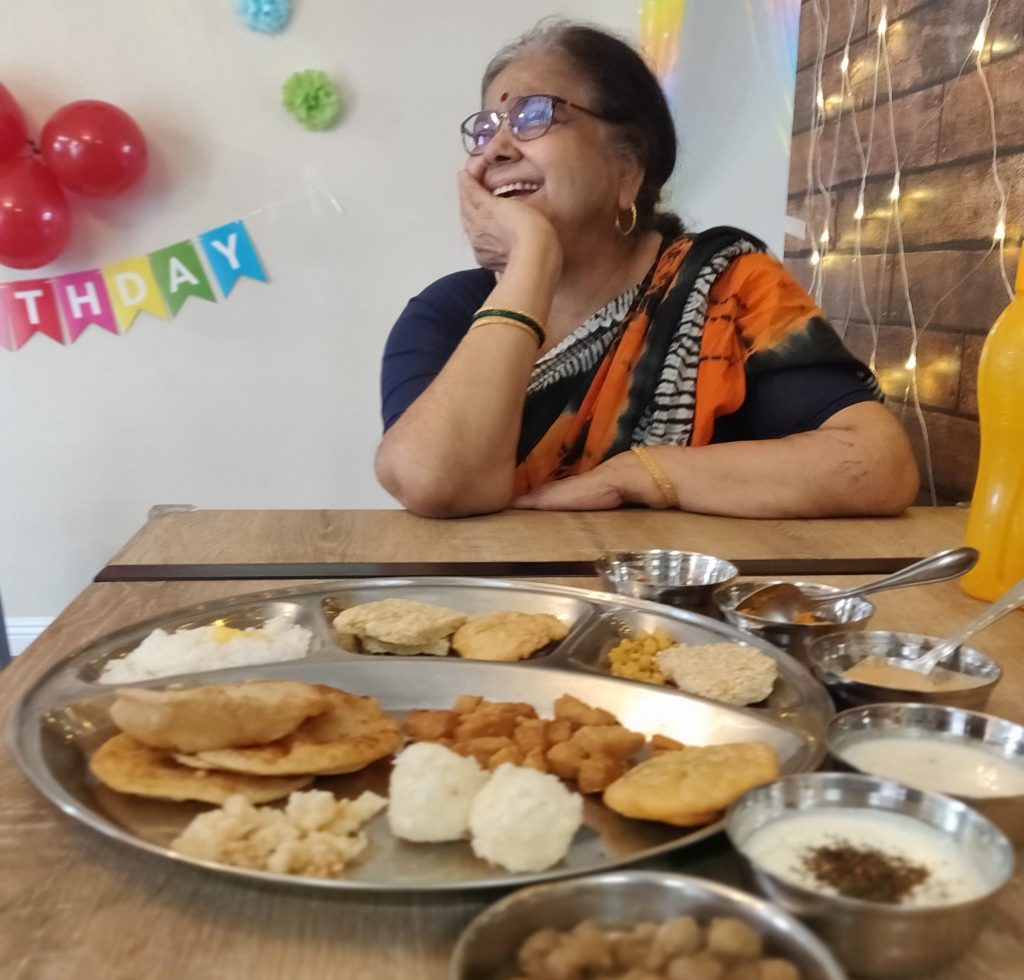
The Recipes She Left Behind
My mother came to California in January 2020, just in time for my son’s birth. She was supposed to stay a few months and then fly home to Agra, India. Instead, she stayed for over two years.
The year before, she had broken her leg and spent weeks on bed rest. With nothing else to do, she started writing something down. Not letters. Not a diary. Recipes. The old vegetarian dishes from her hometown, Agra — dishes that had never once been written on paper, only passed down from one woman to another.
Then my son was born and then COVID hit. My mother was still in California when the world shut down. She had a kidney transplant a few years earlier, and the medication that came with it made her especially vulnerable. Doctors said she couldn’t risk flying, couldn’t risk airports, couldn’t risk being anywhere near a crowd. So she stayed with us. Weeks turned into months. Months turned into more than two years.
She had arthritis in her knees too, and most days walking was hard for her. But almost every afternoon, she’d stand at the kitchen counter anyway, one hand resting on the edge for balance, and cook. I offered her a chair more times than I can count. She always waved me off. She was in control at that time.
This is how she tested the recipes she had written the year before — not from a cookbook, but from memory and instinct, checking that what she remembered still matched what she’d written down. “People used to make anga in earlier times before any long travel,” she told me one afternoon, shaping a ball of wheat dough in her palms. “Only oil, salt, and wheat flour, kneaded with a little water so that it doesn’t go bad quickly. They would take the fist-shaped balls in their bags and cook them over a fire — this was a time before cars or buses, when people traveled on foot, often through forests. The dough, cooked that way, was eaten with ghee and pickle, sometimes jaggery. It keeps for days.” She’d shape it, cook it, taste it, adjust it — and only then let me write down the final version.
My son was barely one year old, far too young to remember any of it. But I remember. I remember propping him in his highchair at the edge of the kitchen while she cooked, and watching him watch her hands, the same way I was watching them too. She would give him some dough to play with — his organic playdough — and that was his childhood, playing with wheat playdough made by his grandma.
We had no idea, back then, how little time was actually left. In March 2022, my mother finally flew home to India. Restrictions had eased, and she was eager to see the rest of the family. Three weeks after she landed, she passed away. There was no warning — just a backache the day before, and then she was simply gone.
By then, the recipes were already a book. She called it The Lost Recipes — the dishes of her childhood, saved just in time. The name feels almost too fitting now. She wrote down what was about to be lost, and not long after, I lost her too. It began on a bed she couldn’t leave, and it ended in a kitchen eight thousand miles from where she first learned to cook, during two years none of us ever asked for and none of us will forget.
I think about her every time I’m in my kitchen now. Last week, I tried making anga again. I got it wrong — too much water in the dough. My son, older now, stood in the doorway and watched me the way he used to watch her. He asked if this was the one his grandmother used to make. I said yes. I didn’t tell him I’d made a mistake. I just handed him a piece, with ghee and jaggery on the side, just like she always did. He ate it happily, never knowing anything was off.
My mother taught me to read before I could write my own name. It turns out the last thing she taught me was this: you write things down not because you have time to spare, but because eventually, you won’t. A recipe, once it’s on paper, belongs to whoever needs it next.
I still don’t always get it right. But I keep trying. That was always the point.
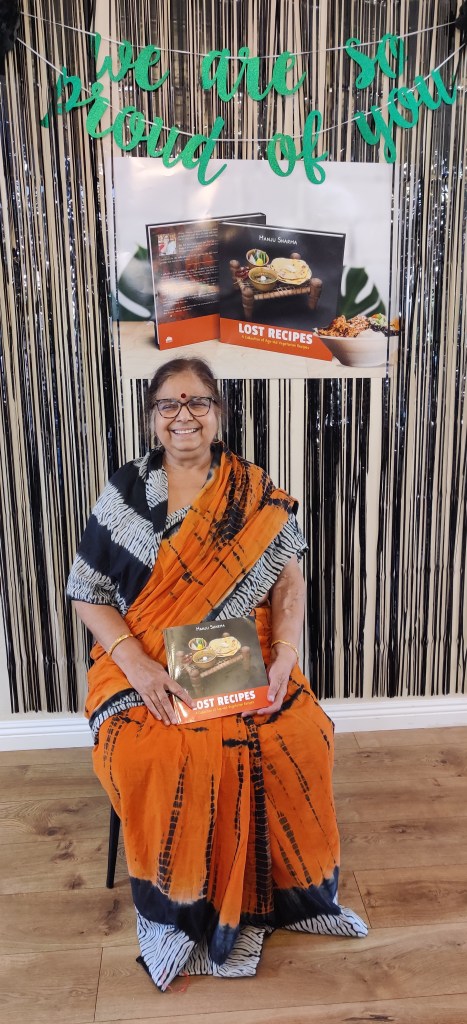
Prachi Sharma is the founder of The Sapling Press and author of Manju: A Life of Grit, Grace and Greatness. Her work has appeared or is forthcoming with KQED Perspectives and India Currents.

