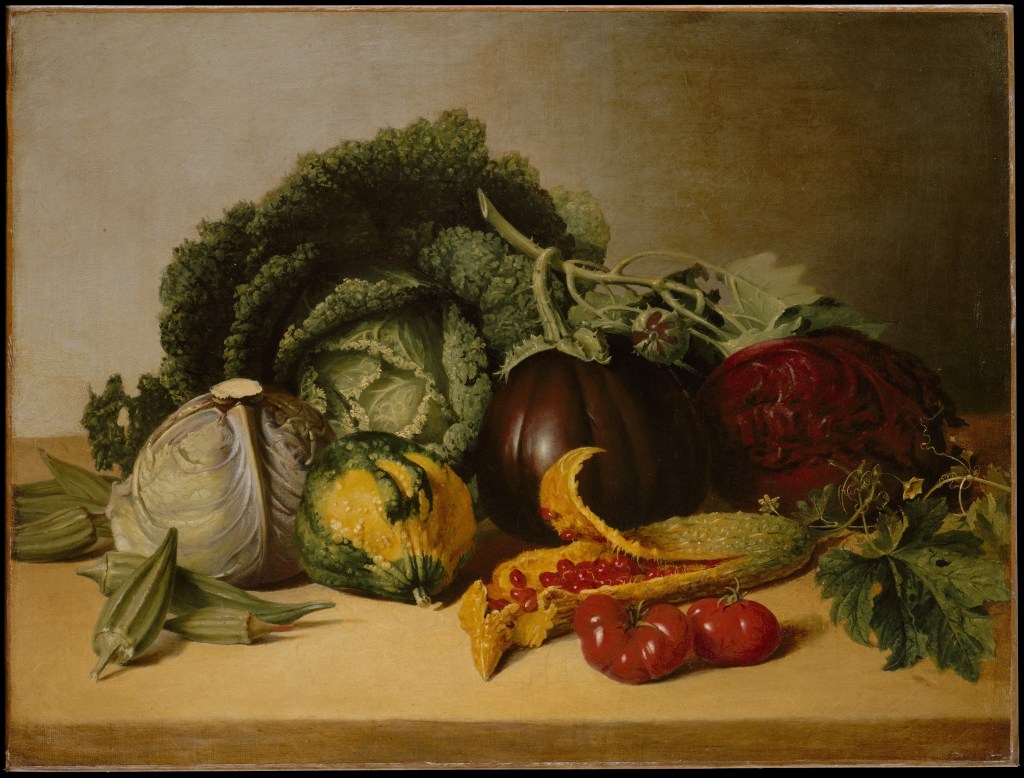
James Peale, The Met, New York
The Box
“So how often do you talk?” he asked. I’d seen Morgan around the halls of Margaret Jacks, the home of the English department at Stanford University. We were in the same PhD program, and he was two years ahead of me. Our first conversation, at a department happy hour the fall of my first year, wasn’t going well.
“Excuse me?” I said. He was inquiring about how frequently I talked to my long distance boyfriend at the time. I had just moved to the Bay Area from my tiny college town in New England where my boyfriend was a senior.
“Every day? Every other day? Once a week?” he pressed, grinning, as though enjoying the interrogation process. I downed the rest of the Trader Joe’s wine in my plastic cup, offered a vague, “You know, when we can,” and wandered off to find a fellow first-year to chat with the soonest I found a break in the conversation. It was none of his business. Just because he was in a happy relationship with a woman who was also in our program didn’t mean he got to judge my long-distance relationship. I held it against him from then on. It didn’t help that the honest answer to his question was, not as often as I would have liked.
Without my boyfriend or my college friends, I was spending way more time alone than I had ever done before. After a post-graduation year slinging coffee at the one coffee shop on the one main street of my college town and figuring out what to do next, I had left the familiarity of the East Coast and moved into a utilitarian grad housing studio flanked by the swaying palm trees of the Stanford campus. I at least had my oldest brother, who had lived in the Bay Area for almost a decade, to pick me up from SFO and accompany me on the interminable Target trip that every big move requires. But once I had bought all the basic necessities of life—jersey bed sheets, frying pan, six-pack of Firestone Walker IPAs—he drove back to Oakland, and I was left to swill my beer on my own.
It was the first time I’d had to start over in a new place since the beginning of college. I had grown up with two older brothers and my parents and then gone to a small college where I’d always shared a common room and a couch with friends. Now, not knowing anyone and taking only two real classes in my first term (to “ease” the transition), I had too much free time on my hands. I started listening to NPR as a way of filling my quiet studio with the sound of a human voice. I complained to my boyfriend on the phone about feeling lonely, to which he helpfully replied, “Well, it isn’t college any more.”
A part of me worried that he was right. It wasn’t college any more. I was supposed to be an adult now. Independent. A person who could handle life on their own. Adults weren’t supposed to be lonely or needy. Adults just carried on with their lives, went to work, paid taxes, cooked dinner.
At the very least, I did know how to make dinner, having grown up in a family of home cooks. To take advantage of California’s year-round fresh produce (a novelty for a New Englander), I signed up for a CSA box by myself, picking up a weekly delivery of fruits and vegetables from a local farm. My spare hours became devoted to figuring out what to cook with sunchokes and lacinato kale. I once spent an entire empty afternoon making chicken soup from scratch, the magical scents of animal bone and aromatics suffusing my apartment, the near-full pot sentencing me and me alone to a week of leftovers.
As the weeks went on, my fridge’s crisper drawers burst with leafy greens and squash. I couldn’t keep up with all that produce on my own. A classmate suggested that I share the box with Morgan, who was looking for a CSA buddy. Since that first encounter, I thought of him as an antagonistic acquaintance at best. But I was struggling to manage the overabundant supply of zucchini, and we both lived in the same building on campus. So I decided to give it a go.
Each week, we separated piles of sweet potatoes and bagged portions of broccoli. We talked about nineteenth-century novels—we both loved Middlemarch—and eventually started dishing department gossip—J.M. Coetzee’s cutting remarks to the department chair at a recent guest lecture; which professors were harshest at job talks by prospective candidates; who was flirting with who at The Nut House, our favored dive bar, on Thursday night. I came to recognize that the line of questioning I’d found so brash before was a sign of Morgan’s interest in other people and their daily habits, not just a lack of social graces. He was transparently nosy, but without malicious ends, like the benevolent small-town neighbors in Gilmore Girls (another mutual favorite of ours).
We had hard-nosed negotiations over chard for broccoli or persimmons for artichokes, depending on what we were each cooking that week. When one of us forgot our share of the strawberries, hidden safely in the fridge to prolong their short life, the other would run the container upstairs (or threaten to eat them). Occasionally, Morgan’s girlfriend Tasha, a second-year in the PhD taking some of the same classes as me, would join him when he came by to split the veg, and we’d share notes on the menus we were planning.
I even started to look forward to our weekly text over when to swap the goods:
Vegetables o’clock?
Got the greens
Blueberries!
Morgan was my first friend outside of my cohort and a whole three years my senior, a fact he relished reminding me of. I’d become friends with other first-years as well, an almost inevitable development of spending time together in classes and casual gatherings. Many of those connections felt like a familiar recapitulation of college intimacies, but sharing the box with Morgan felt more domestic, more like I was an adult making a home for myself.
About a year after we started sharing the box, Morgan moved in with Tasha. Every other Tuesday, I biked over to their sunny, spacious apartment with the loot secured to the rear rack, eager to split the veggies and catch up with the two of them. It was a newfound pleasure to find others outside of my family just as obsessed with food. We swapped notes on how to deal with all that zucchini (grating, salting, and sautéing) and learned that cucumbers are infinitely more appealing as pickles.
As we cooked dinners together, I gained a reputation for efficiency in the kitchen and a nonchalance towards recipe instructions. Tasha had an insatiable curiosity for new menus, always with an untried Alice Waters or Ottolenghi recipe on her mind, while Morgan was a dutiful sous-chef and diligent planner. We ate our way through each season, frying shishito peppers in the summer, roasting squash in the winter, and shredding beets in the spring.
Sometimes we planned elaborate, multi-course dinners meant to impress because we knew we were in the company of fellow connoisseurs. Other times, we kept it simple, enjoying a humble soup thrown together after hours spent alone in the library. I always brought over mounds of homemade chocolate chip cookie dough, Morgan’s favorite, popping them in the oven after dinner and then wedging them into bowls with cold vanilla ice cream for dessert.
One evening, they invited me over to feast on a fatty slab of pork loin they’d bought at the farmer’s market. After arriving by bike, I put a bottle of white wine in their fridge and joined Morgan on the prep line to peel potatoes while Tasha scored the pork with a knife. “Does this look right?” Tasha asked, and we both peered over at the prize piece of pig, slathered in a mixture of bay leaf, garlic, and salt.
“What does the recipe say?” Morgan said.
“I’m sure it’s fine,” I replied, nibbling on a piece of cheese.
Once we’d reached a consensus, it was time to roast. Tasha laid the pork directly on the oven rack as the recipe instructed, and Morgan slid the roasting pan of potatoes beneath. We gathered around the oven to watch the fat drip down onto the potatoes with the heady expectations of watching the ball drop on New Year’s Eve. The kitchen filled with the primordial smell of sizzling meat while we set the table and sipped on glasses of wine. After an hour and a half of anticipation, Tasha wrangled everything out of the oven, the pinks, whites, and yellows having transformed into shades of blush, cocoa, and mustard. As we tucked into the crispy, juicy pork and golden crusted potatoes, we let out a collective sigh of pleasure. The silent, mutual appreciation of fat and starch reminded me of the same silence that would fall over my family as we began to devour a lavish holiday meal. Full and content, I felt at home sitting with them around the table.
By then, my long-distance relationship had ended, unable to bridge the gap between my new life and my old one. Soon after the breakup, I started dating a friend from the PhD program. During my second year, I spent almost every night at his apartment, just down the hall from mine. I planned and cooked dinner for us with produce from the box and he would wash the dishes in exchange, except for the occasional evening he made us grilled cheese or picked up takeout. We would wake up to his automatic coffee maker and eat my homemade granola for breakfast.
This was the acceptable version of domesticity that I was expected to cultivate as an adult. Even though I had close friends, being single and alone still left you sad and vulnerable in the eyes of the world whereas being in a relationship meant you had your “person” to rely on and create a home with.
But it turned out that we were just playing house. I learned that not every boyfriend lives up to the label of being your “person.” You can end up being the one putting in all the energy to create that home, with little given in return. The relationship didn’t last. But the box did—the friendships, the sense of ease and trust, had taken root.
A few months after the breakup, I was cooking dinner on my own, listening to NPR’s Marketplace, when I sliced through a pile of chard and into my index finger. My finger throbbed with pain. It’s not like it was about to fall off, but it felt like a deeper cut than a scratch that you slap a Bandaid on. I had never been in this situation before, and I was alone. I didn’t know what to do. Sitting on my kitchen floor with a paper towel wrapped around my bleeding finger, I called the campus health center, but they were closed. Unsure of who else to ask, I texted my recent ex, the last person who was meant to be “my person,” the last person who was meant to prioritize me ahead of everyone else. But I got no response.
I could have called my brother, but he lived at least an hour’s drive away in Oakland. And besides, I thought that if I called him, he might brush it off as not a big deal. I’d heard him talk about times when he’d done the same thing to himself while cooking and how he’d just went on with his day. Like him, I was prone to minimize any problem in my life, pretend that I wasn’t actually hurt. That way, I wouldn’t have to ask for help. By not asking for help, I couldn’t be rejected, or seen as weak, a child rather than an adult. My ex not responding to my text only confirmed my fears—if you ask for help, what if you’re met with silence? Isn’t that worse than not asking at all and figuring it out for yourself?
After ten more minutes of quiet panic, I realized that I could try Tasha and Morgan. I felt stupid texting them, sure they were busy with their own plans and feeling like a burden for reaching out. But I was scared and lonely enough to hit send.
A couple minutes later, Tasha called me. They were hosting a friend for dinner, but she said she’d come pick me up in Morgan’s car and take me to urgent care, no problem.
At the clinic, Tasha waited with me while I filled out forms. When I was finally called in to see a doctor, she came with me and paid careful attention to the doctor’s explanation of how to treat a cut. Of course, it turned out to be nothing serious. I felt embarrassed for having dragged Tasha out for no good reason, but she just smiled and asked, “Have you eaten dinner yet?”
We went for the closest, easiest, most California option: In-N-Out. As I munched on my burger and she slurped on a chocolate shake, I felt the emptiness in my stomach fill up, replaced by the warm comfort of being fed.
It wasn’t a boyfriend but friends who answered my call. Friends who I knew would be there for me, just like they were there every week to split the box. Who wouldn’t judge me for “overreacting,” because we were in the same place in life, still figuring out how to make our way in the world. Who would be happy to help, with the same care that we took in preparing food for each other. My romantic relationships hadn’t worked out, but I didn’t need to have “my person,” nor did I need to be the independent adult who handles everything on her own. Instead, I realized that I was allowed to admit when I needed help and ask for it. That friends can provide the support and nourishment we all need, even as adults, to do something as simple as cook dinner.
When I moved apartments the next summer and needed a place to stay between leases for a few days, Morgan and Tasha put me up in their guest room. There was no better way to thank them than with dinner. I found fresh pecorino at an Italian specialty store, then picked up a sourdough loaf and a few giant profiteroles, pastry cream bulging out the sides, from a bakery. But the central dish would come from the box—a dinner salad of roasted yellow summer squash, steamed green beans, shredded carrot, sliced almonds, and thick chunks of chorizo, tossed with a mustard vinaigrette.
When I moved again, this time two hours away, we finally had to give up sharing the box. A year later, they left for the East Coast, and I left California for Boston not too long after. We texted each other to keep up on our latest creations:
Pickling production has begun
Gorgeous! Just the proof I needed of your sure baker’s hands
Made your cold peanut noodle dish for dinner and thinking of you
Like so many friendships made as young adults, our careers ended up taking us to different places, and our dinners together have become fewer and farther between. But we still share a table when we can. On a recent trip to their home in Connecticut, I placed a homemade coffee cake on the counter before hugging each of them and leaning down to say hello to their son Isaac. I held his little hands as he toddled around the house with me and Morgan while Tasha stirred Manhattans. Isaac, a hearty eater like his parents, indulged in pasta and yoghurt before Tasha served up the adults’ dinner: a radicchio and persimmon salad, spaghetti bolognese, and homemade challah bread. Despite all the changes in our lives, nothing was different. I was still right at home.
Akemi Ueda is a writer and high school English teacher living in the Boston area. She completed the year-long Essay Incubator course at Grub Street in Boston in 2024 and has a Master’s in English Literature from Stanford University. Her work has been published in Peatsmoke Journal, WBUR’s Cognoscenti, Herstry, Open Secrets, and Mochi Magazine. Her Instagram handle is @akemimueda.

