Eating Khichdi in Kenya
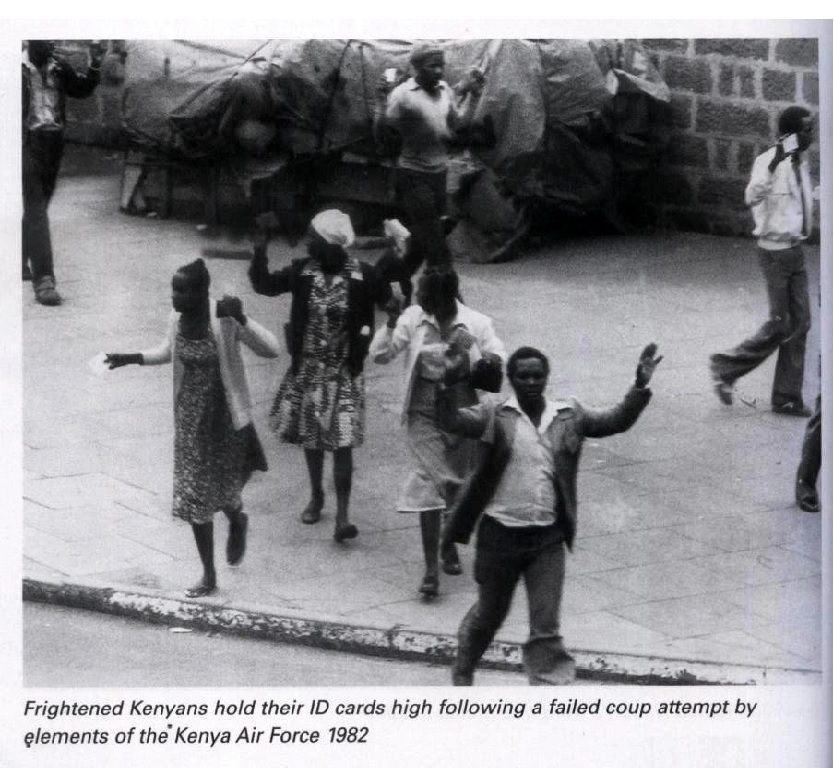
Nairobi, Kenya, Sunday, 1st August, 1982
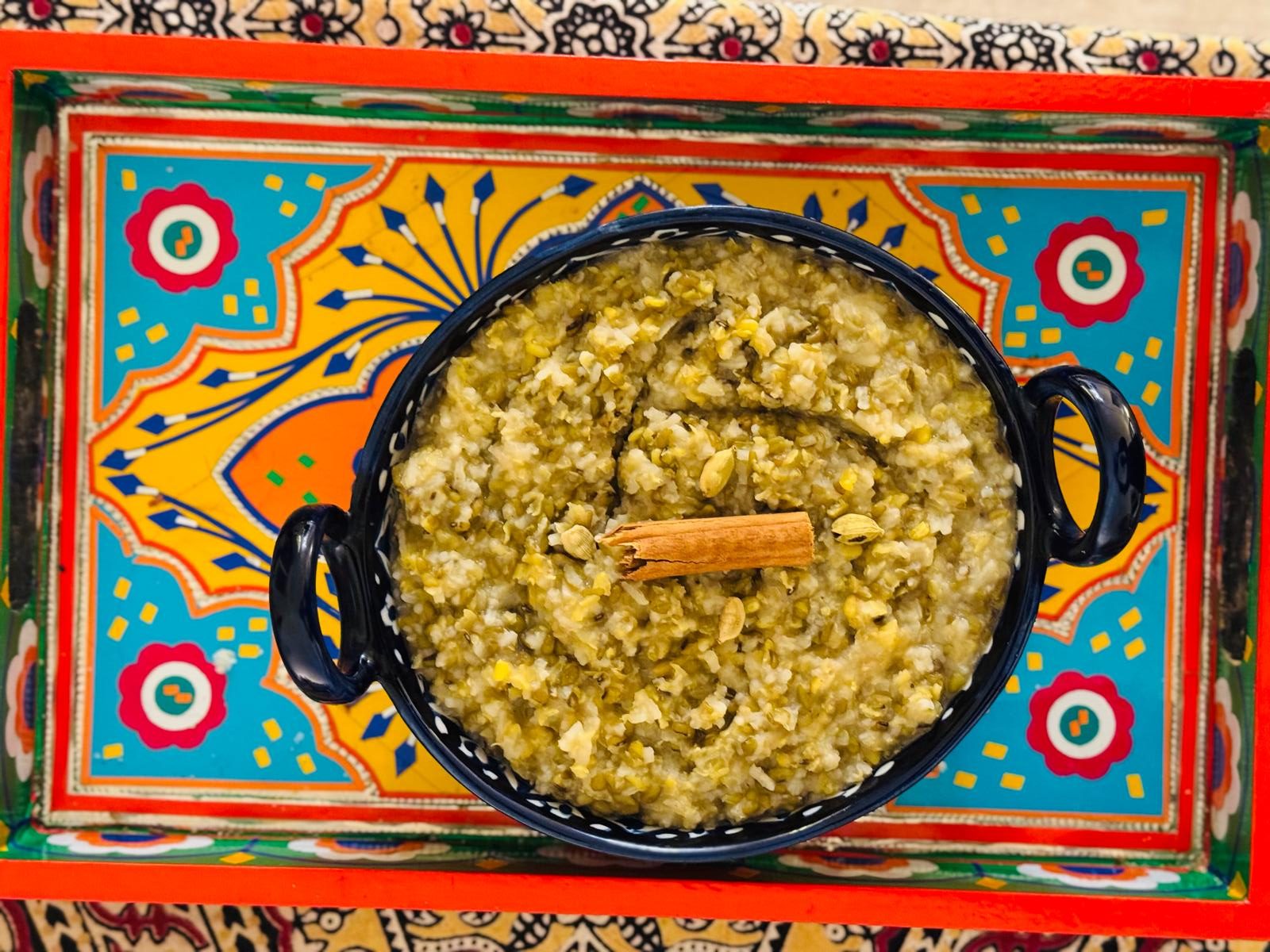
I was twelve years old when I first ate khichdi for ten days in a row. It was also the first time I heard the words ‘coup d’etat.’ That Sunday, my mother came into my bedroom at three in the morning and whispered I should move to her room. In her bed, behind a locked door, we heard gun shots. The telephone lines were dead. There was no power. My mother did not know what was happening and we had no way of contacting anyone. My father was away in Kisumu, a town a few hours away from Nairobi, attending a wedding. This was unusual as he hardly went anywhere without my mother. My younger sister was at my aunt’s place for a sleep over which too was rare, because she and I always visited together. My mother, two-year old baby sister and I lay huddled in bed. From the street, outside our gate, screams, police cars, sounds of shouting, running and ambulance sirens. We stayed there waiting with my mother, only venturing downstairs to get us some food, until we heard over the radio an excited, male voice announce that Kenya was under the army’s control. Shortly after, the gardener knocked on the door saying our neighbours, the Shahs, had suggested it would be safer if we moved in with them. My mother locked up our house, the gardener cut a hole in the hedge, and we crawled through into the Shah’s garden. What I remember most from those coup days was eating khichdi for lunch and dinner. This dish, as every South Asian family knows, is made from equal quantities of dried, split moong beans and rice which are boiled together in a saucepan and flavoured with salt, and sometimes other spices.
Khichdi has an ancient history. The earliest written reference is in The Mahabharata, which mentions the Sanskrit word khiccā, or a mixture of rice and lentils. Seleucus, the Greek emperor in around 303 BC noted that Indians ate a dish of boiled rice and pulses. The Greek historian, Strabo, in around 64 BC, observed Indians consumed a rice porridge and arak, a rice derived beverage. Around 1350, Ibn Battuta, travelling around India, mentioned he ate khichdi, a dish made of rice and mung beans, and 15th Century, Russian adventurer Afanasiy Nikitin, also journalled he consumed it. Under the Mughals, khichdi was transformed into a gourmet dish by adding spices, nuts, and dried fruits. In Ain-i-Akbari, a 16th-century document penned by Abu’l Fadl, Emperor Akbar’s vizier, mentions khichdi, offers seven recipes, and an anecdote about khichdi, Akbar and his advisor, Birbal.
However, to my twelve-year-old mind, there was nothing special or royal about khichdi. It represented claustrophobia and uncertainty: its smell, soft, grainy texture, the greyish, green colour was just a congealed, inedible lump on my plate.
All through those coup days we listened to updates on the radio about looting in the city, chaos on the streets, against the backdrop of gun shots.
‘Will we ever walk the streets of Nairobi freely again?’ Mrs Shah said and served me a helping of khichdi.
I remember thinking, what did it mean to walk ‘freely’? Had I been walking ‘freely’ without knowing? How would I walk ‘unfreely’? I had never thought about freedom before, but confined to the kitchen, bedroom and dining room at the Shah’s, I now understood what it meant to be trapped.
The mound of rice on my plate seemed unsurmountable. Usually, when my mother prepared khichdi, there was also a runny sauce, or khadhi, made from yoghurt, gram flour, water and spices, like turmeric, salt, coriander, cumin, and chillies. These were accompanied with urad dal poppadum, lassi, a salad of onion rings and green chillies and potato curry. But during the coup, none of this was on offer at the Shah’s table. It was served as it was, with firmly set home-made yoghurt.
‘When the President’s back in power, he’ll control where we go, and what we do. Everything will need government authorisation,’ Mr Shah said.
‘No more liberty,’ my mother replied.
Until then, I believed it was my parents who decided my life. Now, I realised, there were forces outside my house which mattered. That my life could be or had been controlled by the government, had never occurred to me.
I also became conscious about other things I’d taken for granted; certainty about my family, and a sense of security. Previously, I’d never wondered about my father’s whereabouts or if he was safe. And now I worried too about my sister; how was she?
Growing up, khichdi was a staple in our house. The way my mother prepared it was to put the rice and lentils with water in a saucepan, seal it, and leave it to cook on the gas cooker. Other times she used a pressure cooker. However, when I visited my aunt, I noticed she cooked her khichdi on a jiko, a local, charcoal stove, which gave her khichdi a distinct smoky flavour. Each family has their own recipe, and my mother always made a tadka with ghee, and a few cinnamon sticks and cardamom pods which added to the khichdi once it was cooked.
Those days with the Shahs passed in a blur; we listened to the radio for updates about looting in the city, people being arrested, and killed. We could not contact my father or sister as the telephone lines were down and there was a curfew.
I gazed at the mound of khichdi on my plate, then took a spoon and squashed the middle to make a small dip.
‘The looters attacked the Hilton today,’ Mr Shah said. ‘A man broke down the door and raped a woman. He tried to escape but was shot by the police.’
‘We are at the mercy of those in power,’ my mother said, her voice shook. I asked her what ‘rape’ meant. She said, ‘I’ll explain when you’re older.’ In the coming days I gathered it was something terrible and shameful that happened to girls.
At dinner, while the Shahs and my mother talked about how many had been raped, murdered and injured, I observed the khichdi congealing on my plate; the greenish grey mound thickened and solidified, the yogurt in the hold in the middle was absorbed into the mash. Soggy and cold, it was overwhelming.
The community to which I belong, the Ismaili Muslims, are spread across East Africa. Some families, like my own, have been living here for five generations, when our great grand parents emigrated from India. Many of us no longer have any familial connection with India – yet we retain a cultural, linguistic, social connection to our heritage. We consider ourselves to be Kenyan Asians- we enjoy South Asian food, music, films, art and literature, but we are much more Kenyan. Our Gujrati is peppered with Kiswahili, our recipes include spices not in the original formula of a biriyani, and the same is true of our adaptation of khichdi. Khichdi recipes varies from household to household as it does different regions of South Asia. Some add a tadka, others stick to plain ghee or butter. Some add vegetables like peas, carrots, green chillies and coriander, while some prefer it plain- just lentils and rice.
Nothing stays the same, everything mutates. Either by default or design, it is colonised, appropriated or reimagined. Khichdi is no exception. The Anglo-Indian dish kedgeree, which includes fish is also a derivative of khichdi. Smoked fish is flaked into spiced rice and topped with an egg. Khichdi appeared on the menu of the East India Company in India in the 18th Century and John Grose wrote that many Englishmen in the 1750’s, preferred this ‘country-diet,’ which included khichdi, as it was tastier and seasonally suited.
According to the National Geographic there are no precise historical records about how khichdi was transformed into kedgeree. Lizzie Collingham, a food historian, noted that ‘Khichdi would have been served as a soothing dish at breakfast. The British enjoyed eggs for breakfast and fish would have been served in the mornings, while it was still fresh, before the arrival of the fridge.’ The recipe for khichdi was adjusted, and the lentils were removed, and ‘khichdi became kidgeri, then kedgeree.’ It presumably travelled back to Britain through returning administrators, soldiers and traders.
The first known written recipe for making kedgeree was recorded in the 1790 diary of a Scottish woman, Stephana Malcolm. Her brother was the Governor of Bombay and exposed her palate to dishes such as kedgeree and mulligatawny soup. Her recipe used ‘cold boiled haddock’ or ‘a bit of cod’ along with ‘minced’ hard-boiled eggs warmed in butter and spiced with cayenne pepper. In A History of English Food, Clarissa Dickson Wright describes how in 1861, the queen’s chief cook, Charles Elmé Francatelli, created a version of kedgeree for Florence Nightingale. She also notes that in the 1930’s, Queen Victoria enjoyed a boiled egg with a golden spoon at breakfast, while others around her would indulge in ‘fancy dishes such as kedgeree or devilled kidneys.’ Kedgeree continues to be one of the most popular breakfast dishes at The Ritz, London, even today.
Nairobi, June 2025
Years later, I am back in Kenya when every Wednesday the Gen Z are marching on the streets to commemorate the innocent civilians who died and keep dying at the hands of police brutality. They are also protesting the Finance Bill and corruption in government.
Rex Kanyike Masai, a 29-year-old, killed in 2024.
David Chege, a 39-year-old software engineer, fatally wounded in 2025.
Ericsson Mutisya, a 25-year-old butcher, shot dead in 2025.
They demand the president resign, and in response the government bans news outlets from broadcasting anything live. Although no one obeys this illegal order, it is a reminder of the force of the government: it silences all voices and erases all freedoms.
While the demonstrations continue, we are home, listening to the news and scrolling social media. Demonstrators burn tires on the roads, innocent people are beaten up, women are attacked and raped, shops are looted, and cars smashed to a heap of metal. The government sponsored goons have no limits. It brings back the memory and horror of those khichdi and coup days.
On the news a young woman voices her anger.
‘You, Mr President, you’re not our parent. What’ve you done for us? How are you using our taxes to kill us? Do you think Kenya belongs to you? We’re not afraid of you, we’ve nothing to lose. The State House is not your house. Why are you using our money to renovate it?’
How different it was from 1982, when no one had the courage to speak out or a platform, and there was no list of those who went missing or were killed. But so much is still the same. My mother’s words echoed in my ears; ‘We’re at the mercy of those in power.’
My niece says she is hungry, so I go to the kitchen, fill a saucepan with water and place it on the stove. I add equal portions of rice and lentils. Fear in the pit of my stomach. Sticky palms. Why was I making khichdi when it reminded me of that coagulating grey lump on my plate at the Shah’s all those years ago? Why eat this food, when it symbolised suffocation and everything falling apart? I could not help myself. I melted some butter in a small pan, added cinnamon sticks and cardamom pods. I poured it onto the khichdi and stirred. The aroma of tadka filled the kitchen. My stomach twisted; the memory of the loss of something I cannot precisely name.
*
Khichdi
Ingredients
1 cup split unhulled mung beans
1 cup rice
salt to taste
Method
Wash mung beans and rice.
Boil in a saucepan with 6 cups of water and salt, simmer for 30 minutes.
Make tadka with butter, cinnamon and cardamon.
Add to mixture, beat until smooth.
Farah Ahamed’s writing has been published in Ploughshares, Wasafiri, White Review, LA Review of Books, Massachusetts Review, World Literature Today, Asymptote and Markaz Review amongst others. She is the editor of Period Matters: Menstruation in South Asia, Pan Macmillan India (2022) (www.periodmattersbook.com), described as ‘an essential book about the female body that dispels misconceptions,’ by Book Riot. You can read more of her work at: www.farahahamed.com.

